
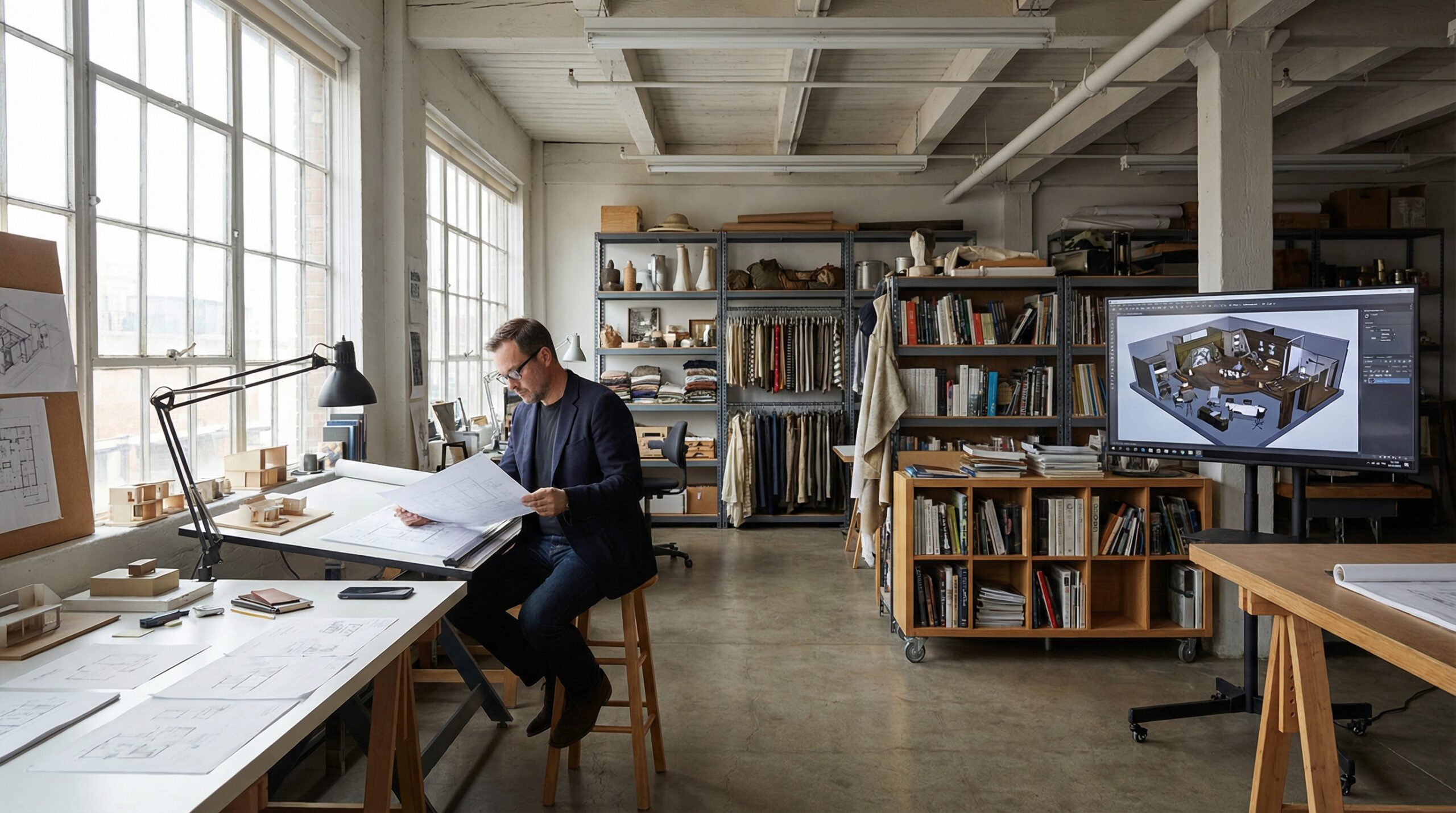
By 2026, the landscape of filmmaking has fundamentally shifted. Recent data shows that 72% of major studio productions have moved away from traditional location scouting. They've traded the unpredictability of the field for the precision of hybrid 'Volume' sets. This isn't just a technical upgrade. It is a total reimagining of the craft. The production designer has evolved from a physical builder into a "World Architect." Today, the boundary between a hand-carved prop and a digital pixel is completely invisible to the eye.
This evolution isn't merely about aesthetics. It represents a restructuring of how stories are told, budgeted, and brought to life in an age of spatial computing.
In my decade of crafting visual stories—moving from a hands-on editor to a Creative Director and developer of tools like Cortex AI—I've seen this transition happen in real-time. We've moved beyond "making movies." We are now architecting realities. For the modern creator, whether you're a SaaS marketing lead or an indie filmmaker, mastering these new rules is mandatory. It's the difference between a project that looks dated and one that defines the next decade.
Key Takeaways
- The Digital-Physical Continuum: Modern design requires mastery of both tangible craftsmanship and real-time spatial computing.
- Real-Time Dominance: Unreal Engine 5.5+ has replaced static blueprints as the industry-standard tool for environmental planning.
- Mandatory Sustainability: Tier 1 productions must now utilize 85% biodegradable or recycled materials to meet "Green Set" mandates.
- AI-Accelerated Iteration: Generative AI tools have slashed the concept-to-approval cycle by 65%, allowing for rapid creative pivots.
- Indie Accessibility: Neural Radiance Fields (NeRFs) allow small-budget creators to transform smartphone footage into high-fidelity 3D environments.
- The VAD Shift: Budgets have moved 30% away from manual labor toward Virtual Art Department (VAD) roles and digital asset creation.
What is Production Design in Film Today?
Production design was once defined by lumber, paint, and period-accurate sourcing. In 2026, the definition has expanded into the Digital-Physical Continuum. This is a seamless ecosystem where foreground elements are tactile and real, while the mid-ground and background are rendered instantly on massive LED volumes.
Defining the Digital-Physical Continuum
Today's designer must be as comfortable with a haptic interface as they are with a circular saw. This continuum ensures that the light hitting a physical prop perfectly matches the light emitted from a
The Evolution from Builder to World Architect
The title "Production Designer" is slowly fading. In its place, we find the World Architect. This shift reflects a broader responsibility. Architects establish the physical laws, architectural history, and cultural textures of a space before a single frame is shot. They no longer simply react to a script. Instead, they use AI-driven pre-visualization to help write the visual language of the story itself.
"We aren't just decorating a room anymore. We are defining the physics of a universe and then inviting the actors to live in it."
The $7.2 Billion Virtual Production Revolution
The global virtual production market has reached a staggering $7.2 billion. This growth is fueled by a 22% annual increase in LED volume adoption across both film and advertising. The old "fix it in post" mentality? It's dead. The new mandate is simple: "get it in camera."
LED Volumes and the End of Scouting
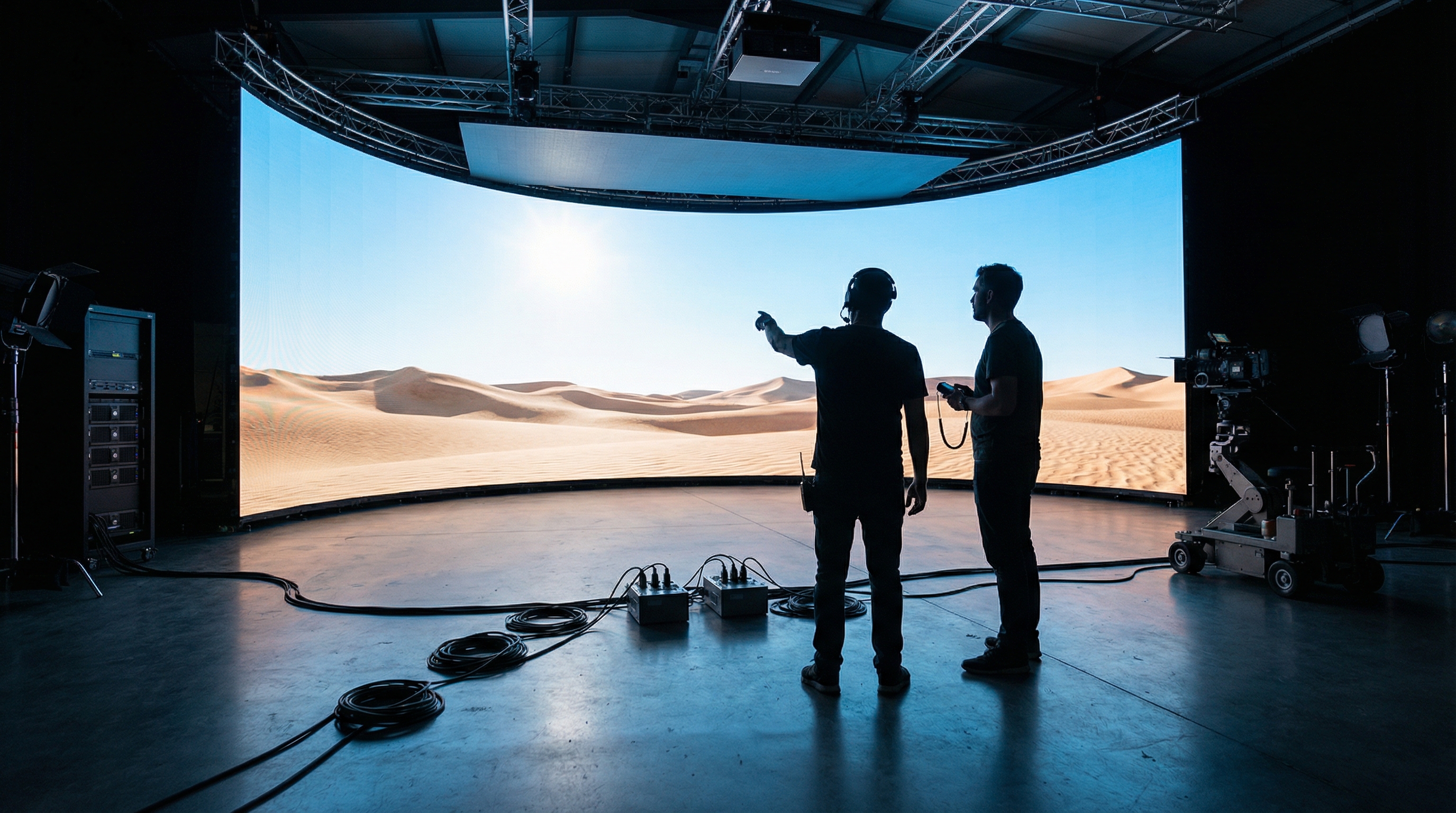
Traditional location scouting is expensive and unpredictable. By using LED volumes, production designers bring the world to the studio. Currently, 90% of designers use real-time engines to provide directors with final-quality lighting on-set. This allows a "Golden Hour" shoot to last for twelve hours. Think about the creative control that offers.
Real-time Rendering with Unreal Engine 5.5+
Unreal Engine is no longer a gaming tool. It is the primary canvas for the modern art department. Designers build 3D environments that the camera moves through naturally. The parallax effect updates in real-time, ensuring the design remains consistent across every shot, regardless of the angle.
| Feature | Traditional Set Design | Virtual Production (2026) |
|---|---|---|
| Primary Tools | Blueprints, Scale Models | Unreal Engine, VR Walkthroughs |
| Lighting Control | Fixed, Physical | Real-time, Engine-Synced |
| Location Flexibility | Limited by Travel | Unlimited Digital Assets |
| Sustainability | High Waste | 85% Recycled/Digital |
| Cost Structure | Heavy Labor/Materials | Asset Creation/Tech Setup |
AI-Driven Pre-visualization and Concept Cycles
One of the greatest pain points in any production is the approval bottleneck. Traditional concept art is slow. In 2026, AI-driven pre-visualization (Pre-viz) has reduced that cycle by 65%.
Reducing Approval Times
Using custom AI pipelines, designers can generate dozens of high-fidelity environmental iterations in minutes. These aren't just flat images. They are spatial concepts that can be exported into 3D software for immediate refinement. This allows the Director and Designer to align on the "look and feel" in days, not months.
The 'Clay-to-Print' Pipeline
Hero props—the items actors touch most—have seen a 400% increase in 3D printing usage. AI-optimized workflows allow for "clay-to-print" speed. A designer can sculpt a digital prop and use AI to optimize its weight for the actor. The result is printed in biodegradable resin overnight.
Pro Tip: Don't use AI to replace your creativity. Use it to exhaust the obvious ideas quickly. This frees you to spend your time on the unique, character-driven details that a machine cannot replicate.
Sustainability and the 2026 'Green Set' Mandates
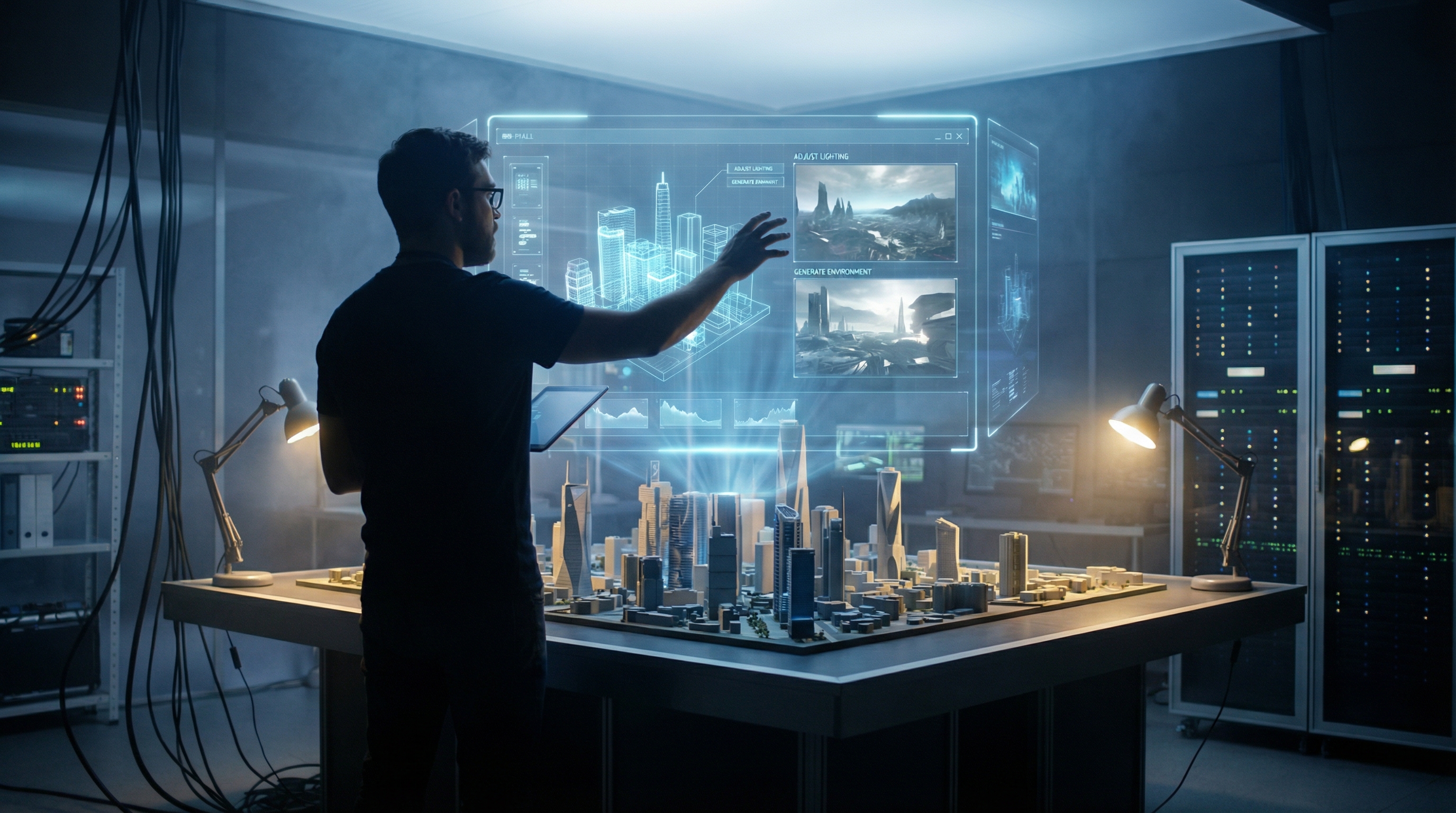
Sustainability is no longer a PR stunt. In 2026, Tier 1 productions are legally required to use 85% biodegradable or recycled materials. This has birthed a new aesthetic: "Minimalist Tech." It emphasizes efficiency, reusability, and modularity.
Carbon Tracking with GreenSpark
Production designers now use software like GreenSpark to audit every material. From the timber in the flats to the chemical makeup of the paint, everything is tracked. This data is often required to unlock tax incentives. Going green is now a financial necessity.
The Minimalist Tech Aesthetic
This mandate has pushed designers away from disposable sets. We're seeing a rise in modular design, where physical elements are built like Legos. They are designed to be disassembled and re-configured for different scenes or future projects. It reduces waste and allows for faster set changes.
Mastering Production Design for Independent Content
Are you an independent creator? These studio shifts might seem out of reach, but the technology is trickling down. In 2026, 60% of indie films use Neural Radiance Fields (NeRFs) to turn smartphone footage into professional 3D environments.
Leveraging NeRFs for Micro-Budgets
You don't need a $100,000 scanner to create a digital twin. With tools like Luma AI, you can walk around a room with your phone and generate a high-fidelity 3D model. Use this model as a background in a simplified virtual production setup. You can achieve a blockbuster look on a shoestring budget.
The "Touch Point" Strategy
The secret for indie creators is the Touch Point strategy. Build only what the actor touches. If they sit at a desk, build the desk and a small section of floor. Let a high-quality monitor or small LED array handle the background. By focusing your budget on the immediate foreground, you maintain the "lived-in" feel.
Pro Tip: Pay extra attention to the floor. The "seam" where your physical floor meets your digital background is where the illusion usually breaks. Use fog, debris, or clever lighting to hide the transition.
Common Mistakes in Modern Production Design
Even with the best tech, failure is easy. In my experience leading teams, I've seen three recurring mistakes that break immersion instantly.
- Ignoring the Parallax: If the background doesn't move in perfect sync with the camera, the image looks like a flat projection. It's an instant immersion killer.
- Over-reliance on AI Concepts: AI can generate beautiful images that are physically impossible to build. You must be the filter. Ensure a "cool" image can actually function as a working set.
- The Trap of Digital Perfection: Digital sets are often too clean. Real life is messy and scratched. If your design looks perfect, it will feel fake. Always add "digital grime" to your assets.
How to Future-Proof Your Career
The industry has shifted 30% of its budget from physical labor to Virtual Art Department (VAD) roles. To stay relevant, you must evolve.
Must-Have Certifications
If I were starting today, I'd prioritize certifications in Unreal Engine 5.5+, Blender, and specialized AI tools. Understanding how to prompt-engineer for spatial environments is now as important as knowing which lens to use.
Transitioning to VAD
Traditional carpenters aren't becoming obsolete; they're becoming Hybrid Specialists. The most valuable people on a 2026 set are those who understand how physical textures translate into digital shaders.
Smart Props and Haptic Feedback: The Next Frontier
We are now seeing the emergence of "Smart Props." Approximately one in five major film props now contain embedded sensors that sync physical movement with digital overlays.
Real-time Sync
Imagine an actor holding a futuristic sword. In the past, the glow was added in post-production. Today, sensors in the prop tell the LED volume exactly where the sword is. This allows the digital environment to react with accurate reflections and shadows in real-time.
Haptic Performance
Haptic props provide physical sensations like vibrations or weight shifts. This helps actors interact naturally with invisible VFX. It bridges the gap between the performance and the digital world, resulting in a more authentic screen presence.
"Technology shouldn't distance the actor from the world; it should anchor them deeper within it."
FAQ
How does AI impact the job security of production designers in 2026?
AI isn't replacing designers; it's evolving them into World Architects. While it automates repetitive tasks like texturing, it requires human expertise for physical feasibility, storytelling depth, and artistic cohesion.
What is the average cost of a virtual volume set vs. a physical set?
While the initial tech setup for a Volume is 15-20% higher, it typically reduces overall costs by 20-30%. It eliminates travel, reduces crew size, and shortens the post-production window.
Which software certifications are most valuable today?
Mastery of Unreal Engine 5.5+, Blender for 3D modeling, and tools like Luma AI for NeRF scanning are the industry benchmarks for 2026.
How do sustainable set mandates affect film budgets?
Initially, sustainable materials cost 10-15% more. However, these costs are often offset by tax incentives and the elimination of expensive waste disposal fees.
Can indie filmmakers use virtual production on a micro-budget?
Absolutely. By using Hybrid Workflows and smartphone-based NeRF scanning, indies can create high-fidelity environments combined with small physical "touch points" for a high-end look.
Conclusion
Production design in 2026 is no longer just about building sets. It's about architecting entire realities through the integration of AI, sustainability, and real-time technology. To stay ahead, you must embrace the Digital-Physical Continuum.
Whether you're a solo creator using a phone or a Creative Director managing a $100M set, the goal remains the same: create a space that feels lived-in and essential.
Ready to scale your visual storytelling? The future belongs to those who can bridge the gap between the tangible and the digital. Start by integrating NeRF scans into your next project and see how virtual environments can elevate your brand's authority.