
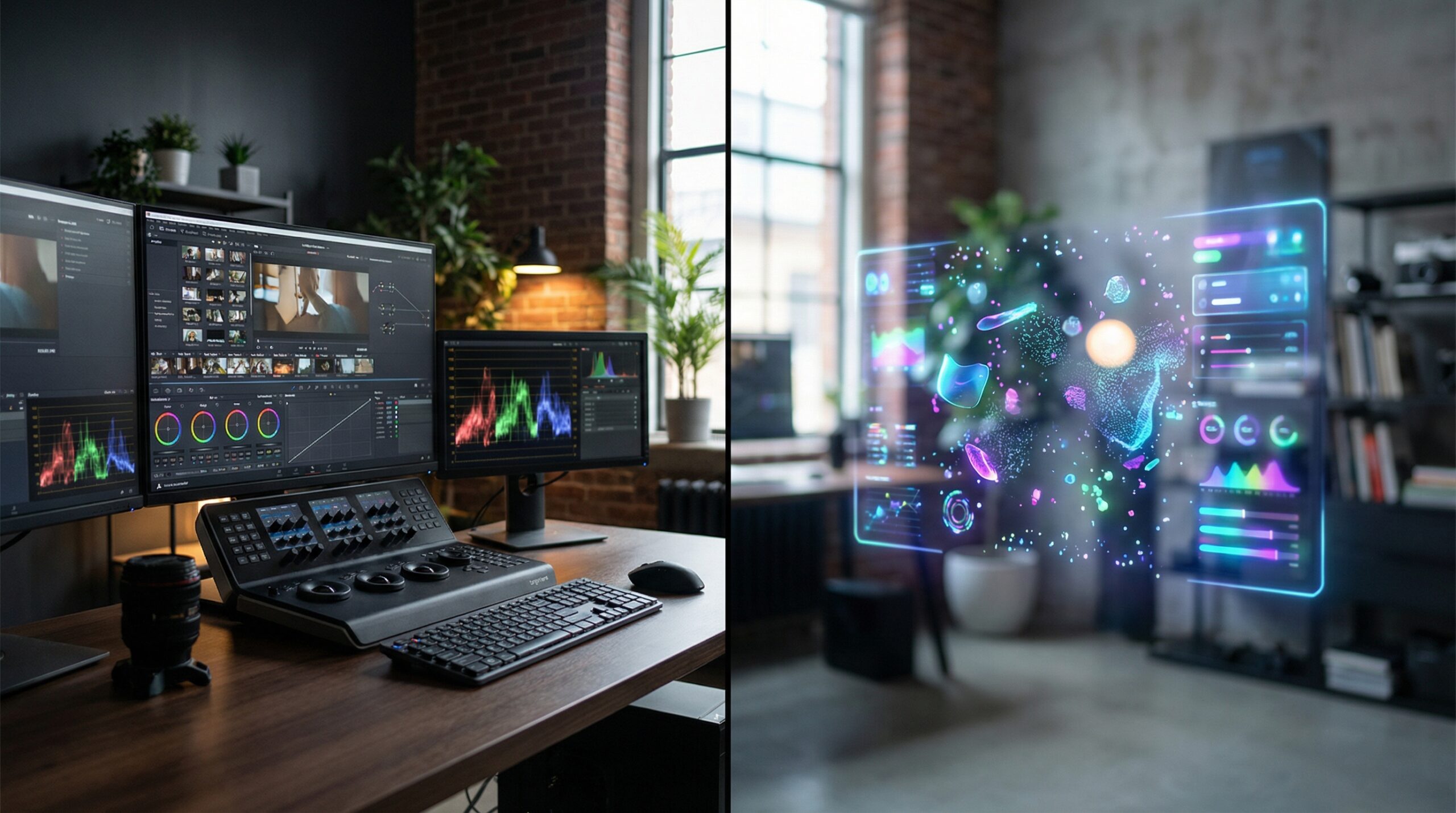
By 2026, video isn't just part of the internet; it essentially is the internet. With 82% of all global traffic dedicated to video content, brands are no longer fighting for space—they're fighting for a heartbeat of attention.
The line between a simple cut and a cinematic experience has vanished. Are you building a narrative that actually converts, or are you just filling a timeline with noise?
Understanding the divide—and the synergy—between video editing and motion design is no longer optional. It is the definitive boundary between a $72,000 salary and a $138,000 career.
Key Takeaways
- Short-form engagement has peaked, requiring a "3-second rhythm" to maintain viewer retention.
- Motion design generates 1,200% more social shares than static content by lowering cognitive friction.
- The 'Hybrid Creator' who merges narrative instincts with generative AI is the highest-paid professional in 2026.
- SaaS brands have shifted motion design from "decoration" to "Functional UX" for product onboarding.
- AI-driven workflows have boosted business ROI by 82% by automating technical "grunt work."
- Video SEO now targets LLM-based visual searches, making metadata as important as the edit.
Video Editing vs Motion Design: The Essential 2026 Breakdown
The fundamental difference between video editing and motion design has shifted. It's no longer about which software you open, but about the strategic psychological impact you aim to deliver.
In my decade of crafting visual stories, I've seen that video editing is the art of subtraction. It's surgical. You take raw footage and find the "soul" of the story through pacing and rhythm.
In 2026, the first two seconds of a video determine 90% of its performance. If an editor fails to capture attention immediately, the rest of the narrative is irrelevant. Here's why: viewers have developed an instinctual filter for boredom.
Conversely, motion design is the art of creation. It involves giving life to the inanimate—typography, logos, and data. In the SaaS world, this has evolved into "Functional UX." It's no longer just about making things look pretty. It's about using micro-interactions to guide a user through a complex interface in seconds.
Defining the Modern Video Editor
Today's editor is a narrative strategist. While tools like Adobe Premiere Pro and DaVinci Resolve remain the standard, the role now requires an intimate understanding of platform-specific algorithms.
You must know how to cut for "silent scrollers." This means integrating t work on mute, it doesn't work.
The Functional Role of Motion Design in 2026
Motion designers have become the secret weapon for B2B brands. When you're selling an abstract product—like an AI-powered SEO tool—you can't always film it in action.
Motion design fills this gap by visualizing invisible processes. It transforms complex data into digestible, animated stories. The result? A 30% higher conversion rate compared to standard screen recordings.
Median Salary Comparison 2026
- Video Editor (Generalist): $72,000
- Motion Designer (SaaS Specialist): $138,000
Pro Tip: Don't view these as separate silos. The most successful projects I've directed succeed because the motion design supports the edit's narrative beats, rather than distracting from them.
The Shift Toward the Hybrid Creator Model
The era of the "specialist who only cuts" is fading fast. In 2026, the most sought-after professionals are Hybrid Creators. These individuals possess the storytelling instincts of an editor and the technical precision of a motion designer.
But wait, there's a third pillar: generative AI. About 58% of marketing videos now utilize AI-generated voiceovers and digital double avatars. This allows brands to localize content globally at a fraction of the traditional cost.
As a Senior Brand Manager, I've seen how automation transforms the workflow. We no longer spend hours on "grunt work" like basic rotoscoping or subtitle alignment. Instead, tools like Cortex AI handle the heavy lifting.
Combining Generative AI Prompts with Narrative
The hybrid model uses AI to generate B-roll, expand backgrounds, or create high-fidelity textures. However, the creator's role is to ensure these elements align with the brand's core message.
It's a "Human-in-the-loop" philosophy. You provide the strategic vision; the AI provides the infinite variations. This shift focuses your energy on human emotional resonance—the one thing AI cannot yet replicate with 100% accuracy.
Scaling with Digital Double Avatars
For SaaS companies, scaling video used to be a logistical nightmare involving studios and talent. Now, we use digital doubles to create personalized onboarding videos for thousands of users simultaneously.
This level of hyper-personalization is only possible when you master the intersection of production and automation. It's about making every single user feel like the video was made just for them.
Video Editing vs Motion Design: Proven ROI Strategies for SaaS
Marketing managers often ask which skill they should prioritize for their next hire. The answer depends entirely on your funnel stage.
For brand awareness and social engagement, video editing is king. For feature onboarding and lead conversion, motion design is your powerhouse.
| Feature | Video Editing | Motion Design |
|---|---|---|
| Primary Goal | Emotional Storytelling | Functional Communication |
| User Impact | Engagement & Retention | Education & Conversion |
| Key Metric | Watch Time / Retention | Click-Through Rate (CTR) |
| AI Integration | Scene Cutting & B-Roll | Procedural Assets & VFX |
Using Motion Graphics for Feature Onboarding
Complex software often suffers from high churn during the first 48 hours. By integrating custom motion-designed tutorials that highlight the UI, you reduce the cognitive load on the user.
Instead of reading a 2,000-word help article, they watch a 45-second animated walkthrough. It "shows" rather than "tells." This small change can drastically improve your user retention rates.
Driving Higher B2B Conversions
Case studies from my work show that videos focusing on data visualization outperform talking-head videos in the B2B sector. Why? Because decision-makers want to see the "proof."
They want to see the charts, the growth, and the efficiency brought to life through sophisticated motion. It builds a level of authority that a simple interview cannot match.
Technical Evolution: AI Tools and Cloud Workflows
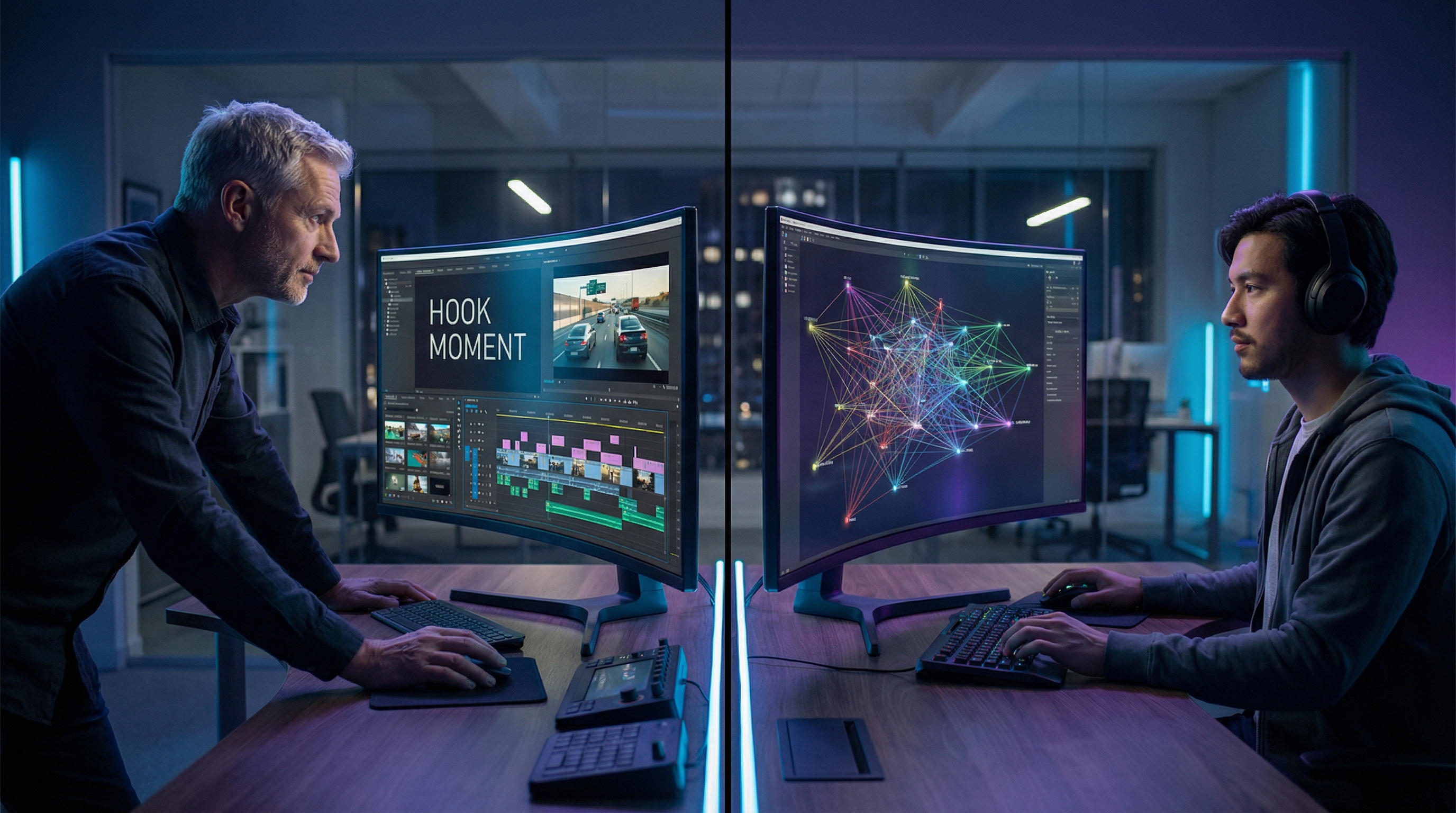
The technical landscape of 2026 is defined by cloud collaboration. We've moved beyond the "on-premise" silo. Remote creative teams are now the industry standard, supported by cloud deployments expanding at a massive rate.
New AI models like Sora 2 Pro and Veo 3.1 have revolutionized B-roll generation. What once required an expensive stock subscription or a two-day location shoot can now be prompted and rendered in minutes.
JustPod and the Podcast-to-Vertical Pipeline
Podcasting remains a massive lead-generation tool, but the value is often trapped in long-form audio. My work on JustPod—a Premiere Pro plugin—was born from a simple need: speed.
The goal is to take a 60-minute podcast and, with one click, generate twenty high-impact vertical clips. These clips come with automated motion graphics for TikTok, Reels, and YouTube Shorts. It's about maximizing the "mileage" of every minute of footage.
Cloud-Based Editing vs On-Premise Setups
While high-end color grading still benefits from local hardware, most commercial work has moved to the cloud. This allows for real-time feedback loops between a Creative Director in New York and a Motion Designer in London.
It eliminates the "render-export-upload" bottleneck that slowed down production for decades. Efficiency is no longer a luxury; it's a baseline requirement.
Salary Dynamics and Market Demand in 2026
The financial landscape for creators has bifurcated. Generalist editors who refuse to adopt AI tools are seeing their rates stagnate. Meanwhile, those who specialize in AI-integrated production are commanding record-high salaries.
In tech hubs like San Francisco and London, a senior motion designer specializing in SaaS can easily earn upwards of $138,000. This isn't just because they know how to animate.
Expert Insight: "In 2026, you aren't paid for the hours you spend keyframing. You are paid for the strategic decision of where the user's eye should go and how to use motion to decrease the sales cycle." — Habib Ove
The $138,000 Tech Hub Premium
Why the high salary? Because a motion designer in a SaaS company is effectively a "Product Designer with a Timeline."
They aren't just making videos. They are designing the user's perception of the software's speed, reliability, and modern aesthetic. They are directly responsible for how "premium" the brand feels.
Common Pitfalls: Why Your High-Budget Video is Failing
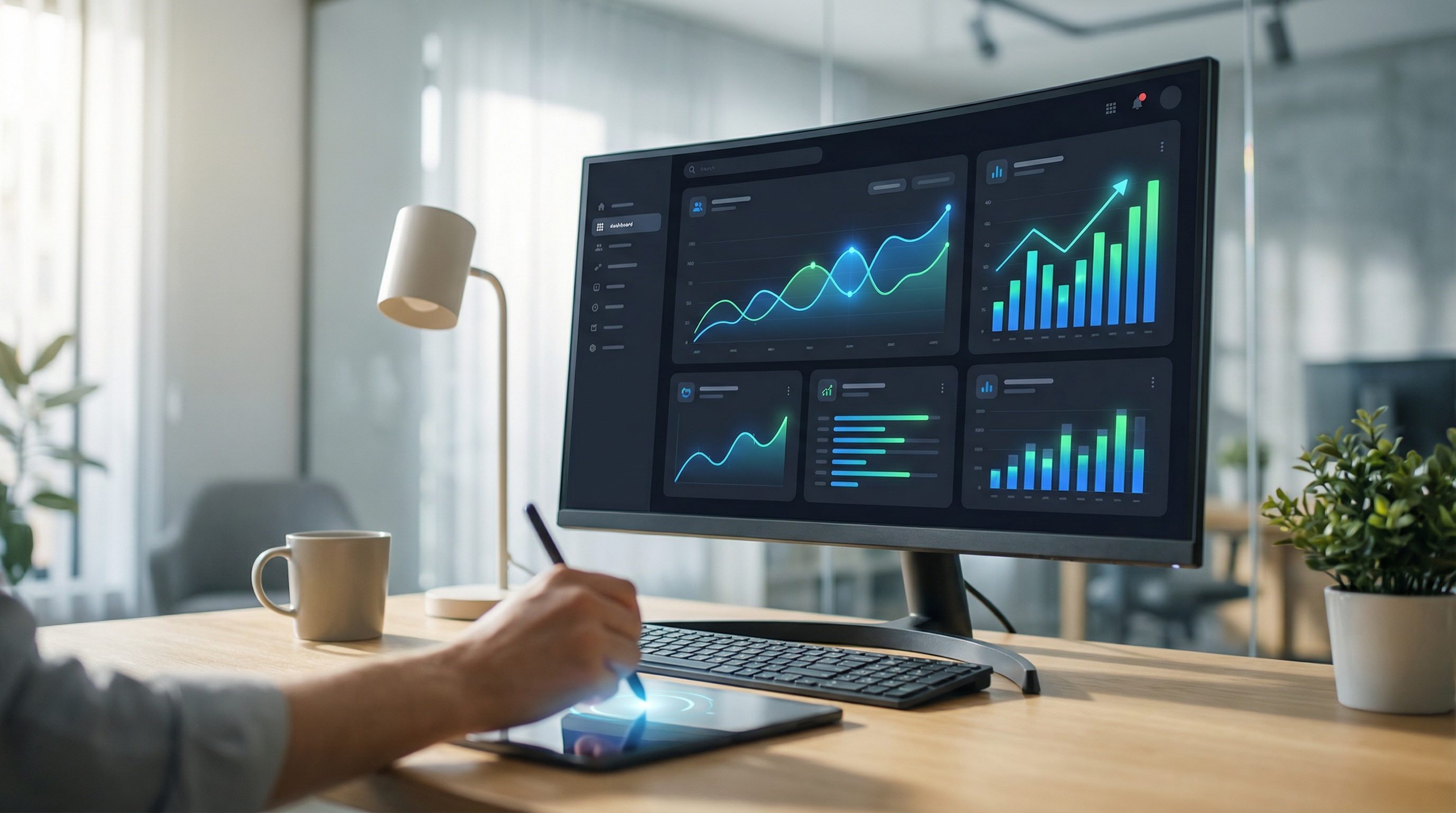
Many brands spend $50,000 on a video that yields zero ROI. The most common mistake in 2026 is "Over-Polishing."
There is a growing movement toward "Authenticity through Imperfection." Younger audiences have developed a high-tuned filter for overly glossy corporate advertisements. They often prefer raw, UGC-style footage that feels human and trustworthy.
The Distraction of Complex Motion
I often see motion designers get carried away with complex, 3D procedural animations that have no intent. If the motion doesn't guide the eye toward your Call to Action (CTA), it's a distraction.
Every movement on the screen should serve a purpose. Does it emphasize a benefit? Does it explain a feature? If it's just "flair," delete it.
Warning: Using generic AI-generated backgrounds that don't match your brand's lighting is the fastest way to signal "low-quality" to your viewers. Always use custom-trained models to ensure consistency.
Mastering Video SEO for the Visual-First Algorithm
If you aren't optimizing your video for search, you're leaving money on the table. In 2026, Google's "Visual-First" algorithm can "watch" and index your video content directly.
Traditional tags are being replaced by context-aware AI metadata. Using tools like RankHiker for search intent alignment ensures that your video appears when a user asks a specific question to an AI like ChatGPT or Gemini.
Indexing for Google's 2026 Visual Search Update
Google now prioritizes videos that have clear "chapters" and dynamic captions. These elements help the AI understand the structure of your content.
If your video is a tutorial, the AI will index the specific 10-second window where you solve a problem. This makes your content discoverable at the exact moment a user needs a solution.
The Hybrid Creator: Mastering the 3-Second Rhythm
To become an indispensable creator, you must apply the "3-Second Rhythm" rule. Our collective attention spans have evolved. If there isn't a visual change—a cut, a zoom, or a motion overlay—every three seconds, the viewer will drop off.
- Second 1-3: The Hook (Visual + Auditory).
- Second 4-6: The Problem (Relatable Narrative).
- Second 7-9: The Solution (Motion-designed UI reveal).
- Repeat: Maintain this cadence throughout the video to maximize retention.
FAQ
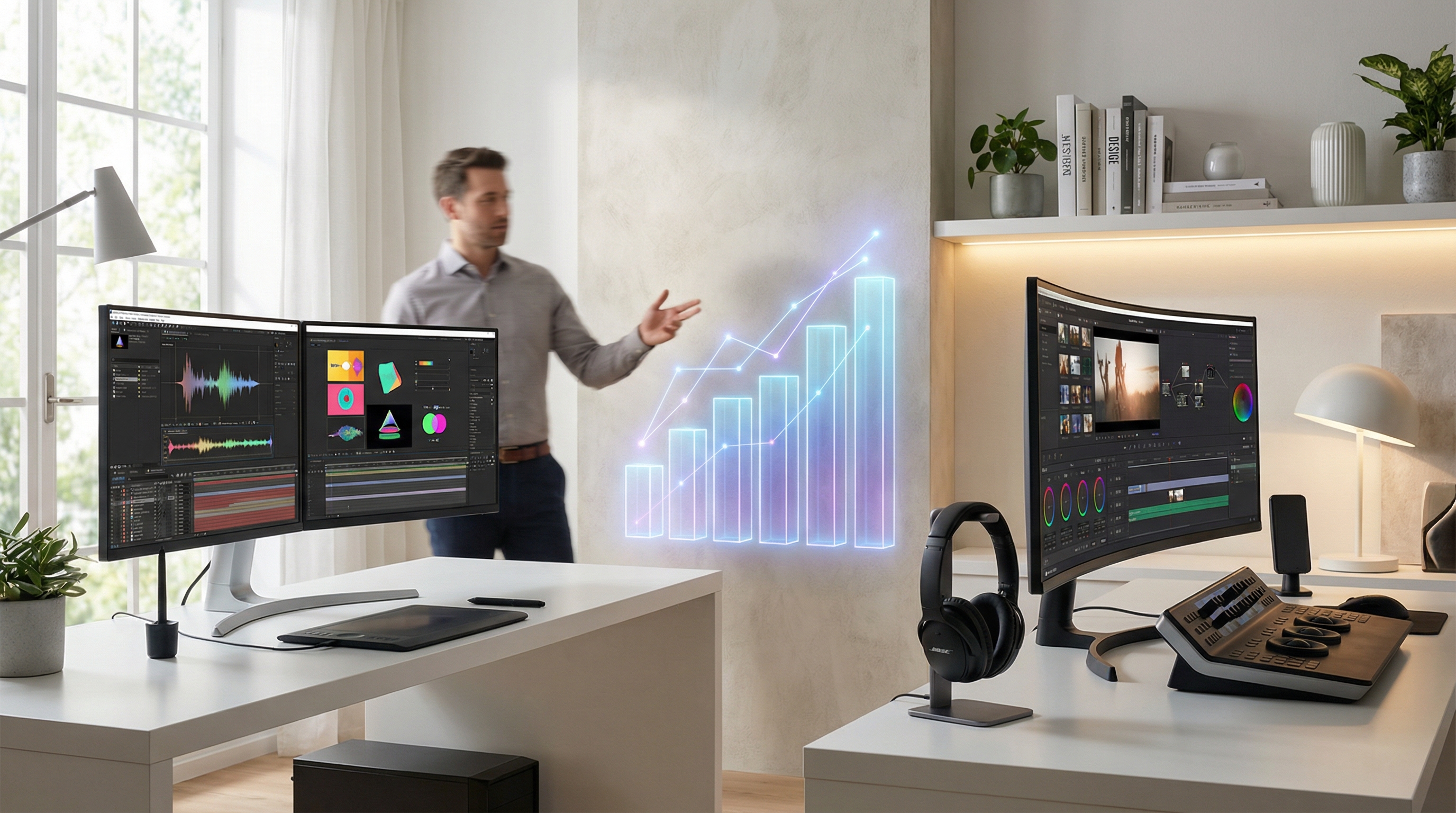
Is motion design or video editing more in demand for SaaS marketing in 2026?
Both are essential, but motion design commands a higher premium for its role in functional UX and onboarding. Video editing remains the backbone of brand storytelling and social engagement. The most successful marketing teams utilize both to guide users through the entire funnel.
How do AI tools like Cortex AI change the workflow for solo creators?
AI tools automate the "grunt work" like subtitling, scene cutting, and basic motion. This allows solo creators to act as Creative Directors, focusing 80% of their time on strategy and hook optimization rather than technical assembly.
What is the average project rate for a freelance motion designer in 2026?
Freelance motion designers in 2026 typically charge between $1,500 and $5,000 for high-fidelity 30-second clips, depending on the complexity of procedural elements. The value lies in the designer's ability to drive specific business outcomes like conversion or retention.
Should I learn DaVinci Resolve or Premiere Pro for 2026's AI-heavy workflows?
Both have integrated powerful AI engines. Premiere Pro remains the standard for agency collaboration and integrates perfectly with plugins like JustPod. DaVinci Resolve is often preferred for high-end color grading and integrated visual effects through Fusion.
How does 'Analog Nostalgia' affect motion design aesthetics in 2026?
It serves as a counter-trend to generic AI outputs. By using hand-drawn textures and manual camera shakes, creators build human trust. It separates their content from overly-glossy, purely automated videos by adding a much-needed "human touch."
Conclusion
The debate of video editing vs motion design is no longer about choosing one; it is about mastering the intersection. In 2026, the creators who win are those who use AI to handle the volume and human creativity to handle the soul.
Whether you are building a SaaS brand or a personal empire, focus on the "Hybrid Creator" model to scale. The technology is here to support your vision, not replace it.
Ready to dominate the visual-first era? Explore tools like Cortex AI and RankHiker at habibove.com to start scaling your content and building your authority today. The future of content creation is automated, personalized, and deeply human. Are you ready to lead it?